

Hunting for Gold
A diversion for today

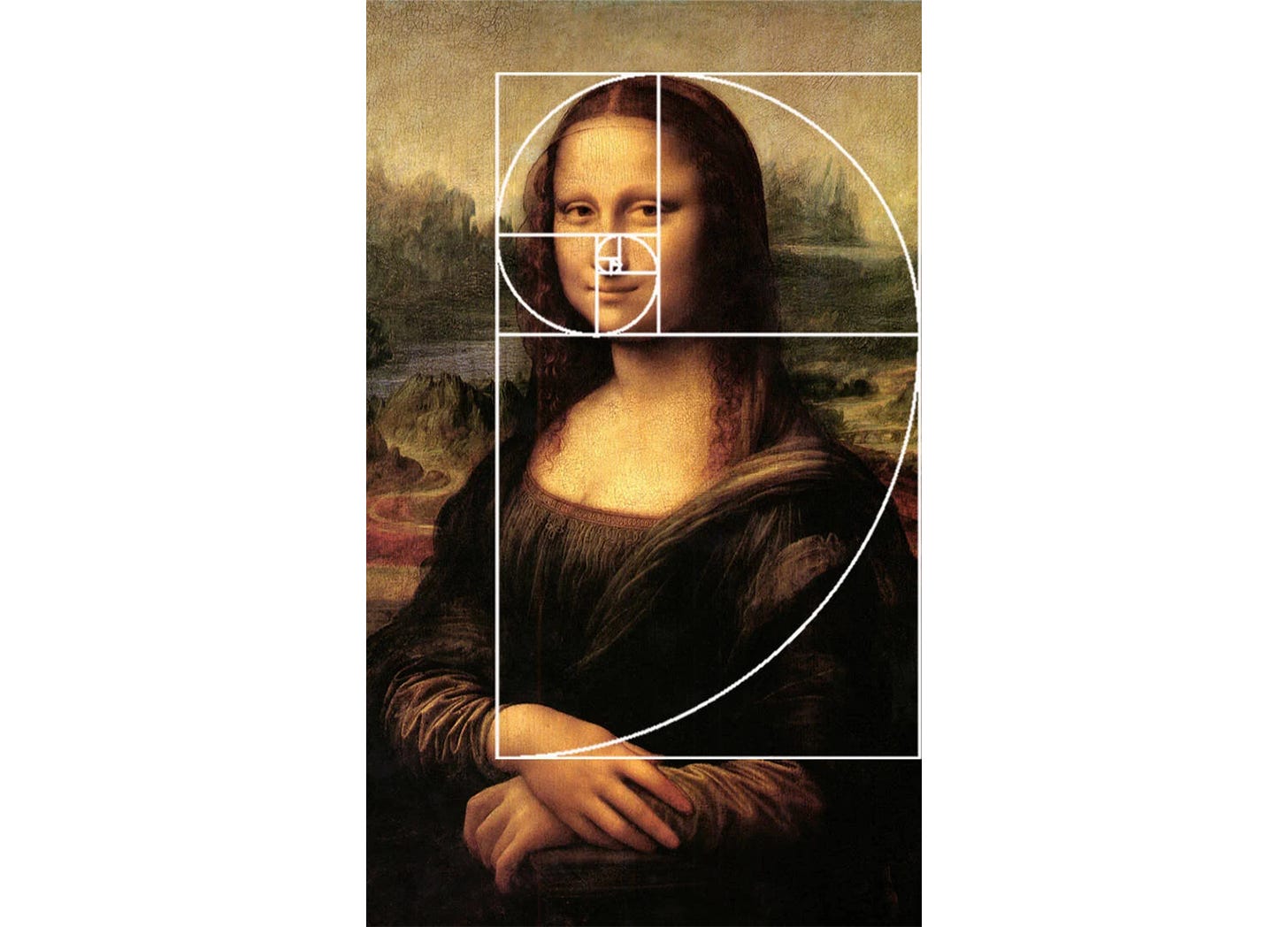
HUNTING FOR GOLD
A few days ago, I posted a painting of a nude. This got me thinking about The Golden Ratio.
Hang on. Follow me and we’ll get there.
The Golden Ratio is a mathematical formula represented by the Greek Letter Phi. You get it when you divide a line into two parts so that the whole length divided by the long part is also equal to the the long part divided by the short part.
For me, who studied in a different building than the math guys, this is sort of like the jitterbug. It’s only a couple of steps, but I can’t explain it, but that doesn’t matter.
It, the Golden Ratio, has been used in the arts for centuries as a way of achieving balance and harmony of proportion.
The first known mention was in Euclid’s Elements, but it didn’t get its cool name until centuries later when an Italian mathematician published a book with the ratio alongside illustrations by Leonardo da Vinci. It came to be understood as a divinely inspired thing.
So, how does it work? When expressed visually, the ratio creates an infinite spiral. It is commonly found in nature. Think of a Nautilus shell here and you’ve got it:
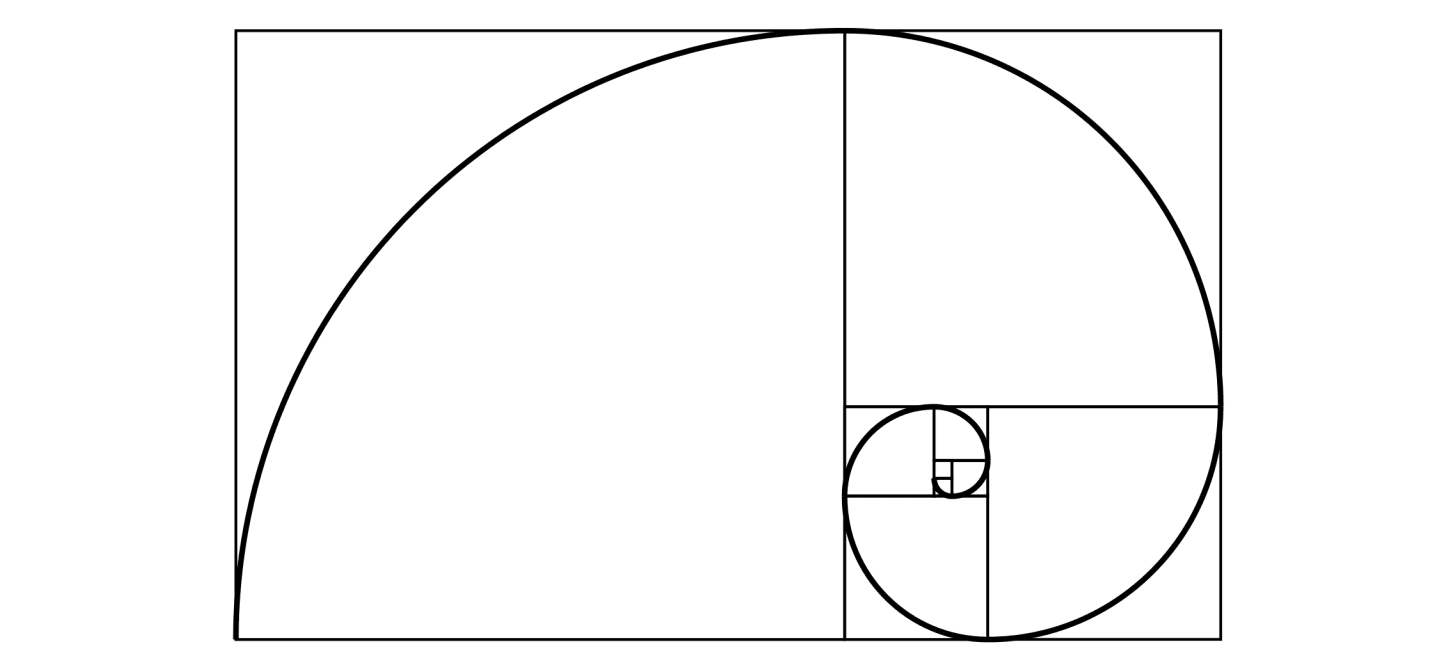
And here’s the fun part. You can find the Golden Ratio as a foundational design element in most Western Art. Now, back to the the nude. Hey, I said it was the fun part.
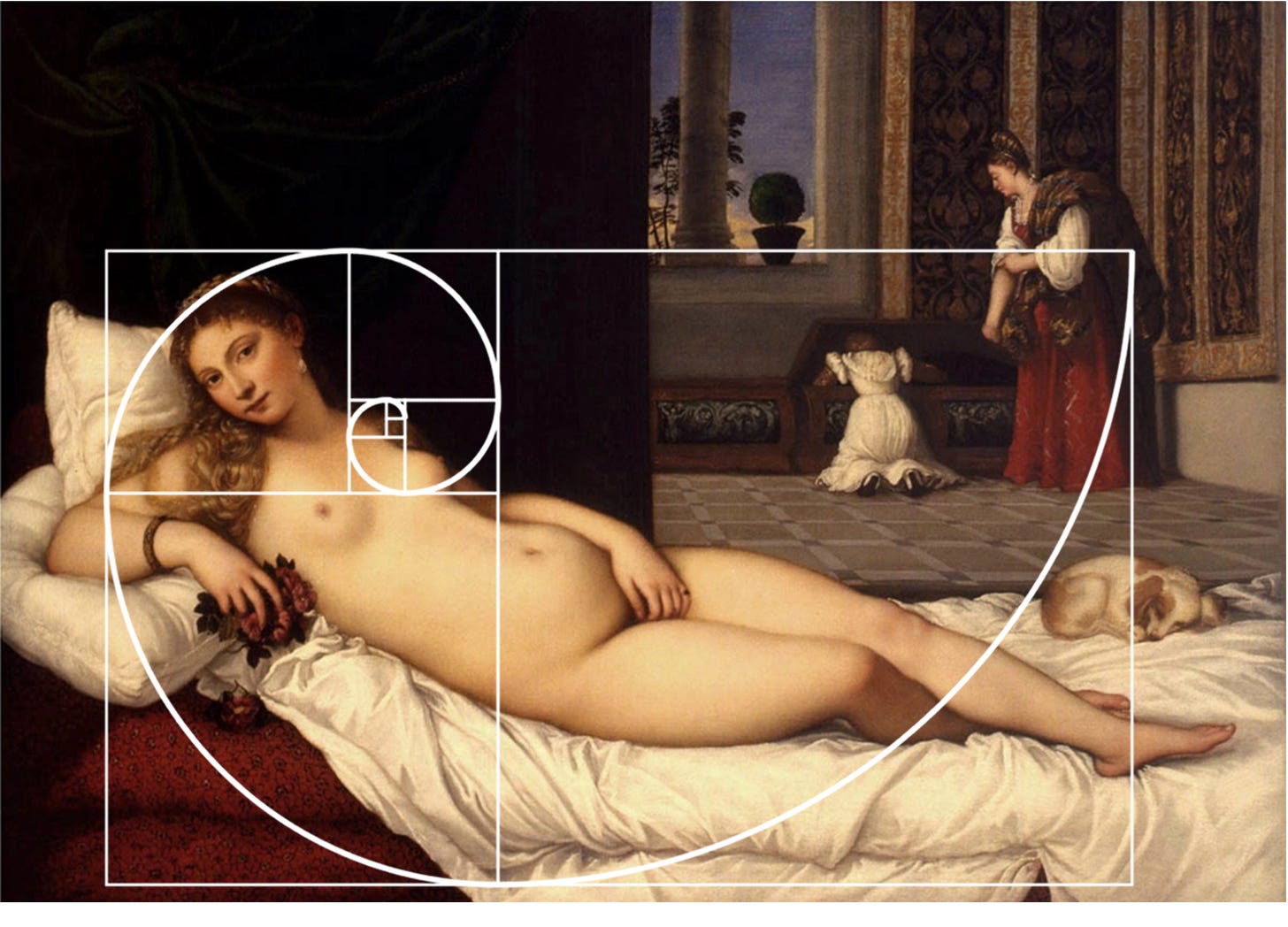
It can be traced in “The Venus of Urbino,” by Titian, 1534.
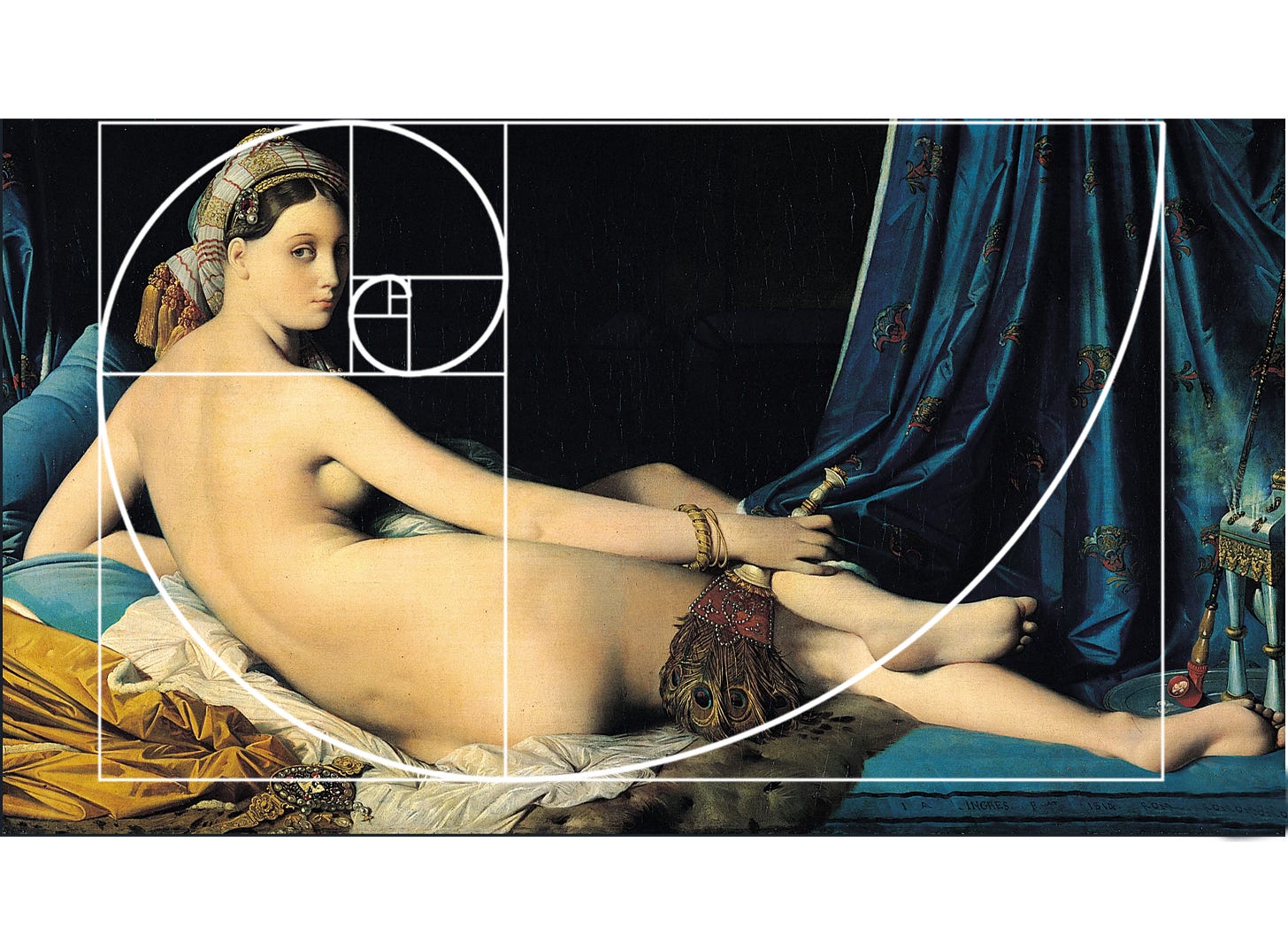
It can traced in the Grande Odalisque, by Ingres, 1814.
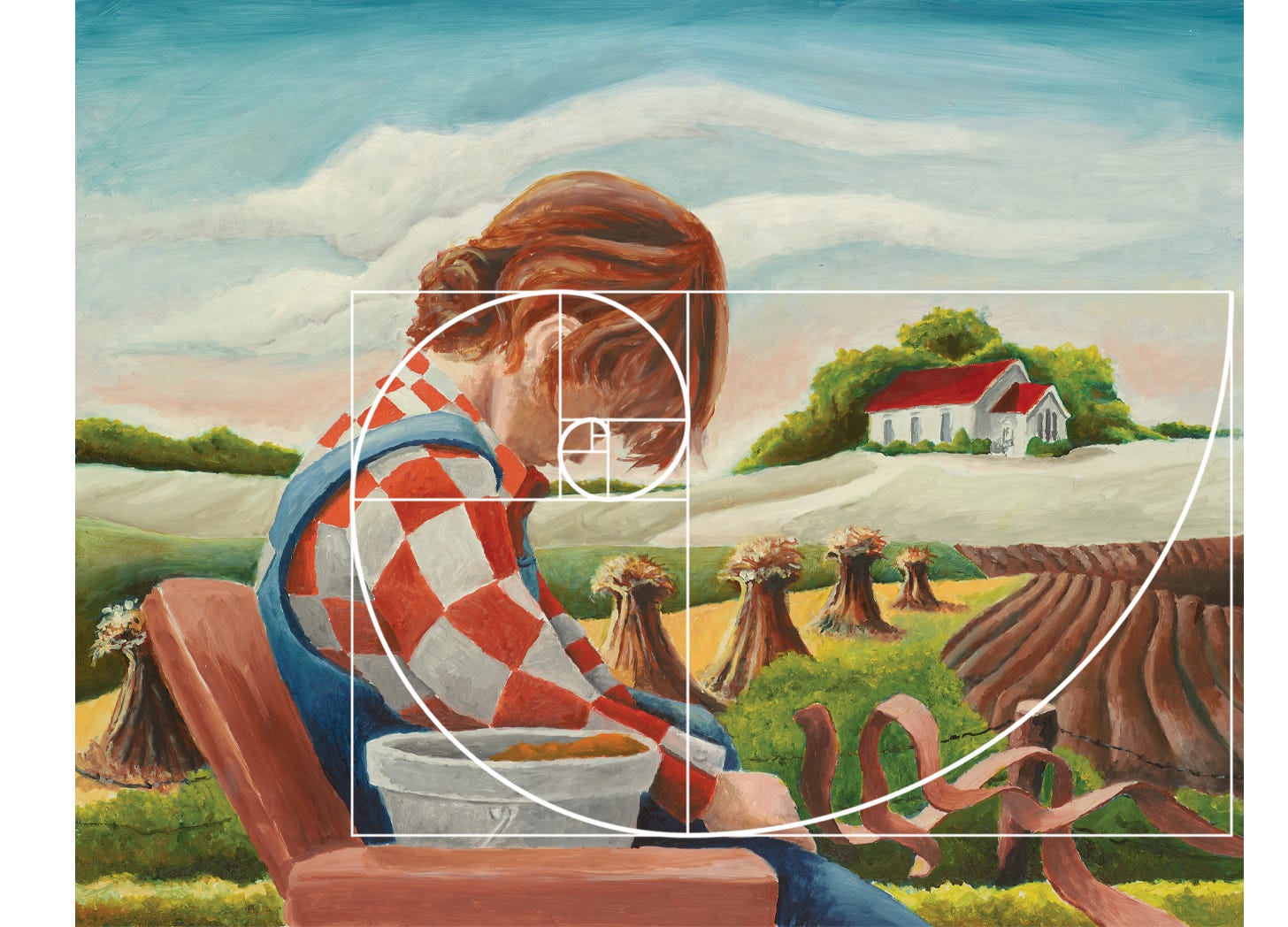
I’ve even found it in my own paintings. Above, an illustration from The First Traffic Jam in Callaway County.
The thing is, it doesn’t work if you consciously attempt to use it. It gets in the way. I tried it once. Thought I would do an abstract piece, but would use the Golden Ratio as an underlying design framework. Didn’t work. The design pattern is simply a Western way of thinking and seeing, of organizing a composition. It’s innate. In other words, the natural vision, the nautilus, came first. The math came later.
This is one of the reasons I’ve always said composition can’t be taught, but you can be paid to teach it.
Note here: Salvadore Dali claimed to have occasionally traced it on his canvasses before starting, but then, he was nuts.
On the other hand, the math absolutely works in architecture.
I’m going to use Christopher Wren here, because I sat and stared at a Christopher Wren church for two summers when I was teenaged tour guide.
Wren was a rare polymath – artist, astronomer, anatomist, engineer, humanitarian, mathematician, physicist, politician, architect. He was a mathematician before he became an architect.
He used the Golden Ratio most notably in the facade and dome of St. Paul’s Cathedral. I came to believe he used it in the church I stared at, St. Mary Aldermanbury, a Wren church that was rebuilt in my hometown. Here is the East end of the church:
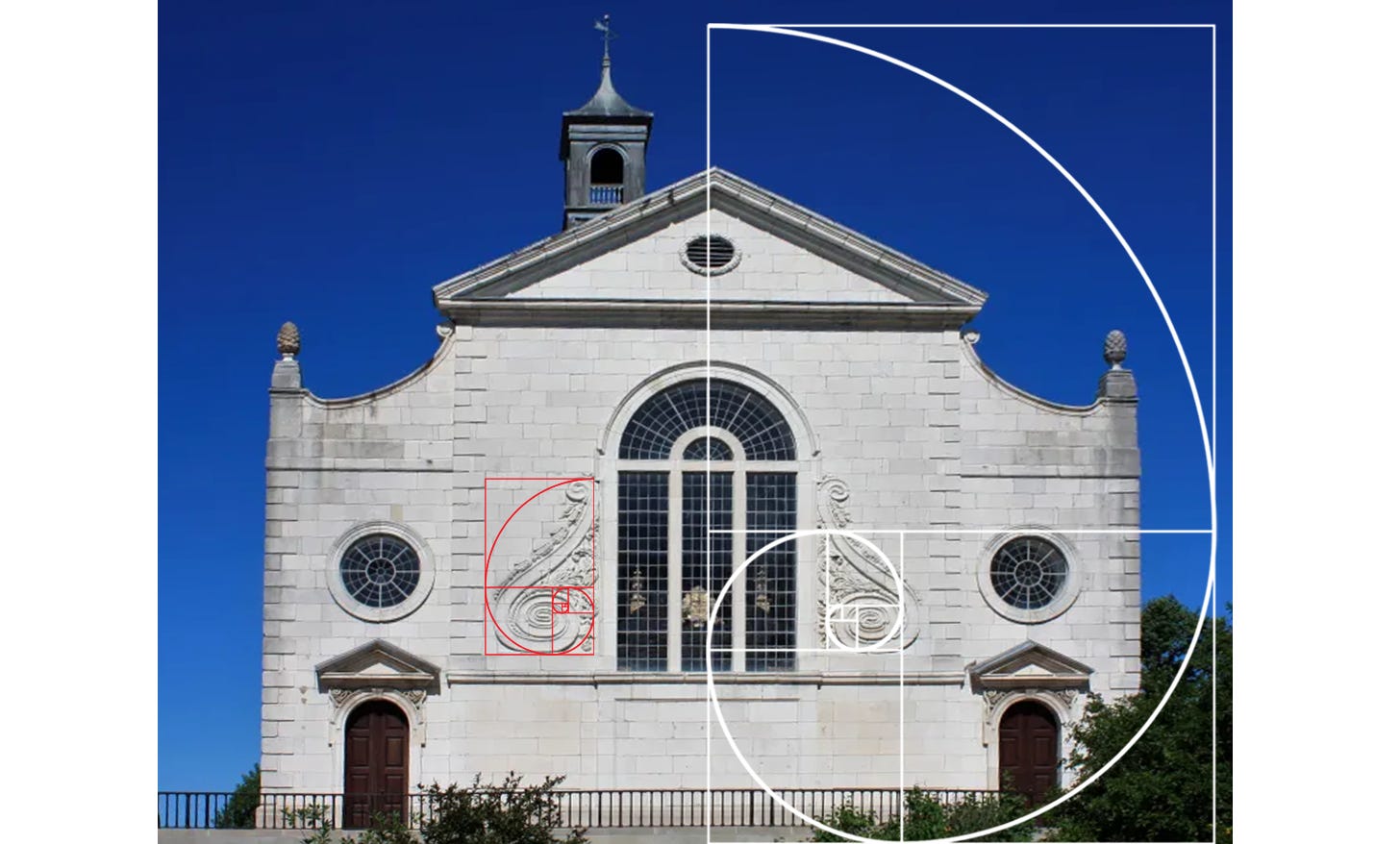
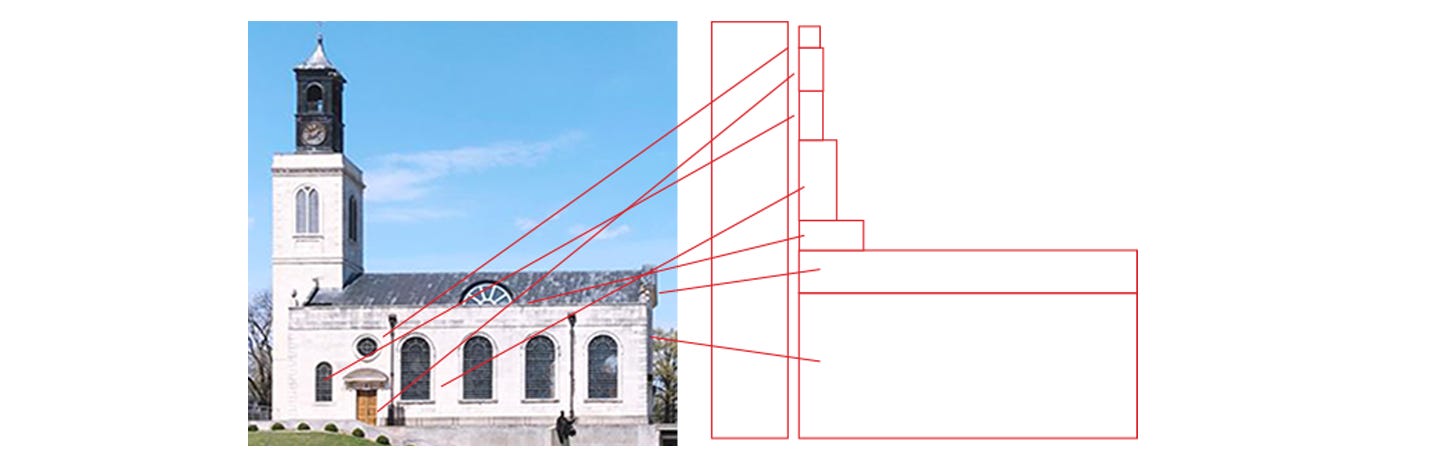
Once I stacked up the proportions of the design elements on the side of the church and compared that to the height of the steeple. They equaled the height of the steeple. I have no idea if that means anything. Like I said, I stared at it for two summers. Nudes, by the way, are way more fun.
On a museum tour, it can be interesting to search for the Golden Ratio in paintings. After awhile, though, it gets tedious. It’s just there.

Why do I have never know d this?